Redesign of Instructional Materials
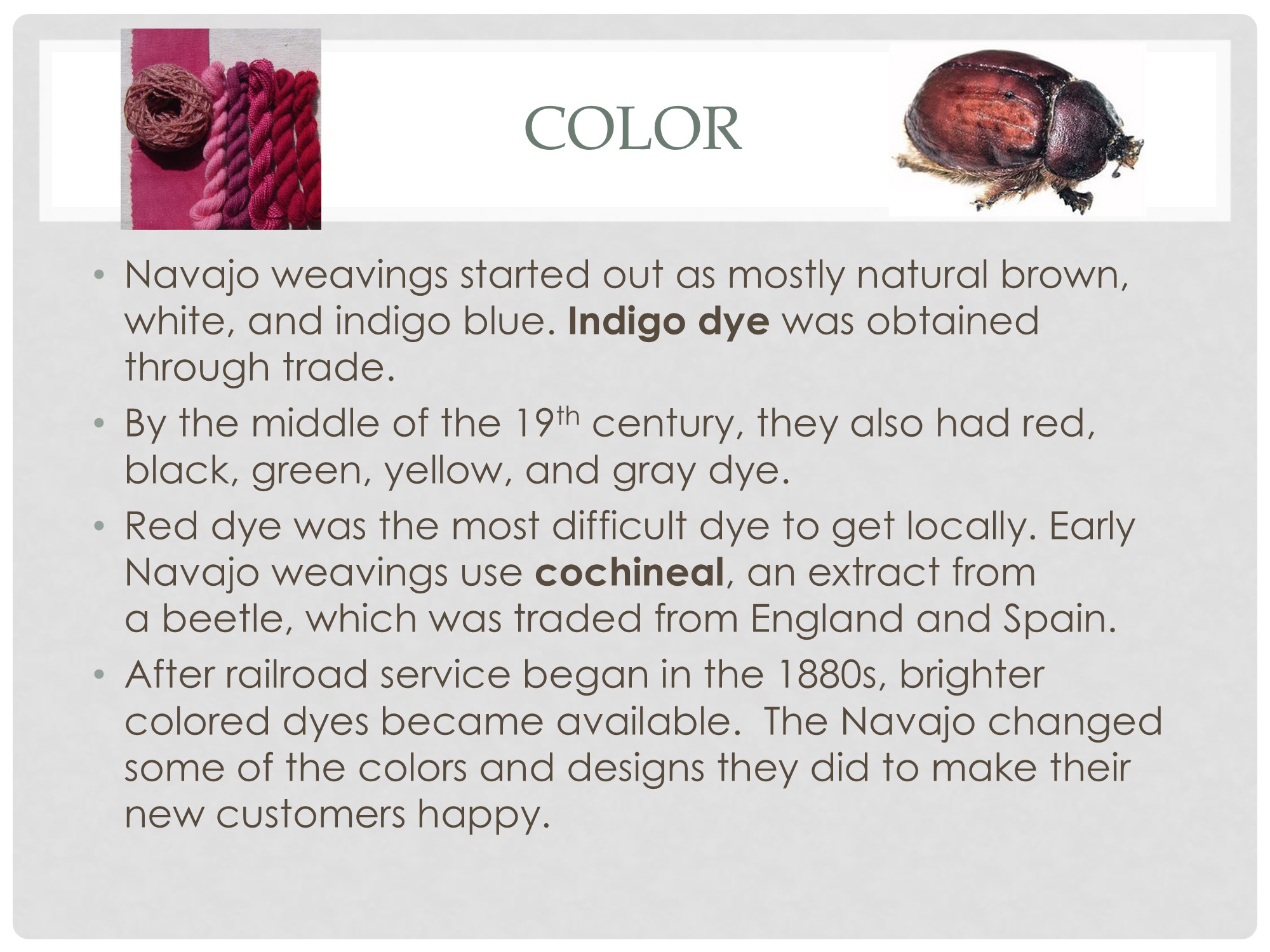
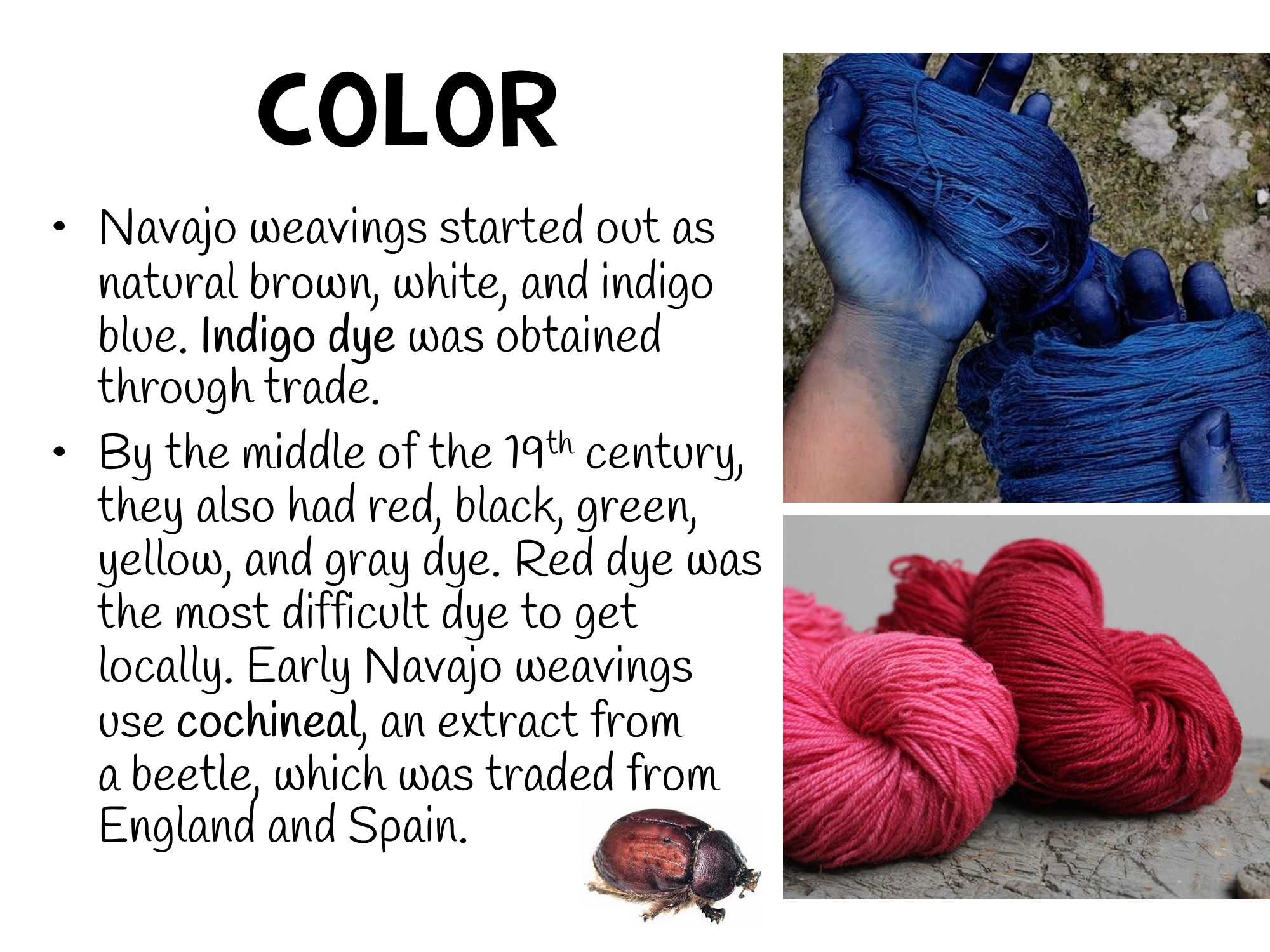
Slide 1 : Before and After
Changes Implemented:
- The first change that I made to this slide about how the Navajo dyed cloth was that I put the pictures that went with each fact, next to the text. This is part of the multimedia principle that states that words and pictures are better than words or pictures alone. It also represents the spatial contiguity principle where putting words close to the image they go with reduces cognitive load.
- Having the images along with the text also aligns with the Dual Coding Theory, which states that combining text and visuals enhances understanding.
- I removed the gray background to create a better contrast between the black text and white background for people with low vision.
- I removed the distracting box around the title.
- I also deleted the last fact which I thought was not needed. This goes with the coherence principle that information that is not pertinent to the material should be left out.
- Lastly, I added a picture of someone’s hands holding yarn that has been dyed with indigo, since I did not have that before and felt it was important to see to gain understanding of what dye looks like and how it can stain a surface.

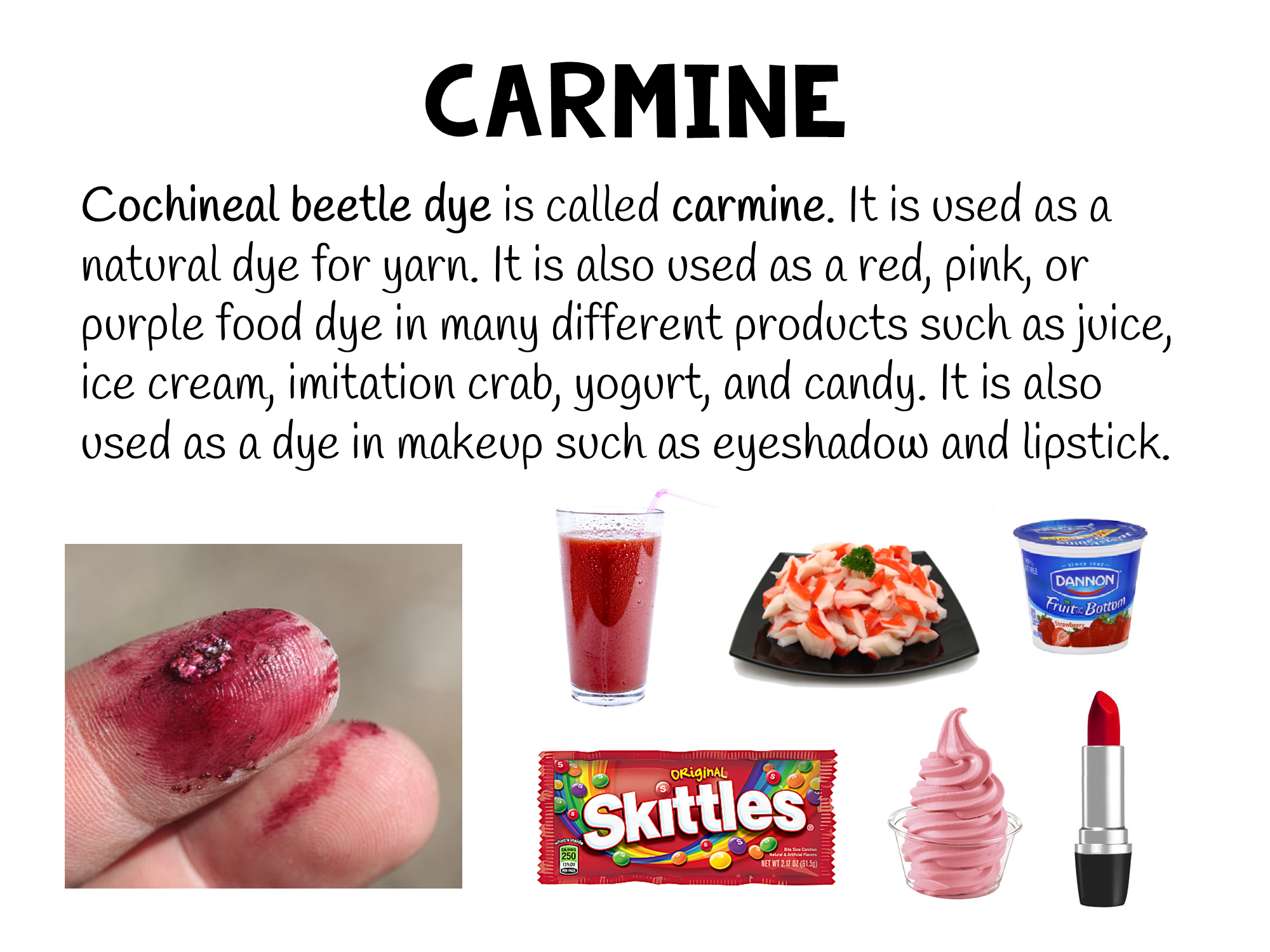
Slide 2 : Before and After
Changes Implemented:
- Again I deleted the gray background to help people with low vision read on a higher contrasting background.
- I deleted the white boxes around the title and other pictures and simplified the title.
- I changed a few of the pictures to represent the kinds of products cochineal beetle dye (carmine) is likely to be found in. I used the multimedia principle that words and pictures are better than just words or pictures alone.
Reflection
How Mayer’s Multimedia Principles & Dual Coding Theory Were Used–
- Multimedia Principle: Words and pictures were used together to help strengthen memory by using both systems for storing information.
- Coherence Principle: Unnecessary information was left out of the text.
- Spatial Contiguity Principle: Words and images that went together were placed next to each other to decrease cognitive load on the user.
- Dual Coding Theory: Visual and verbal representations were presented together to make users have a greater understanding of what products contain carmine.
Overall, I think that the new slides about dye in the Navajo Weaving presentation are clearer to see and read.
 Karen- MEDT 7490